
Did you know that we have LinkedIn, Instagram and X accounts
that you can follow?


Hi {{first_name|everyone}},
Trump wants an "AI Force," and nobody can quite say what that means yet, so we're breaking down what we do know and why Obama and Trump are pulling in opposite directions.
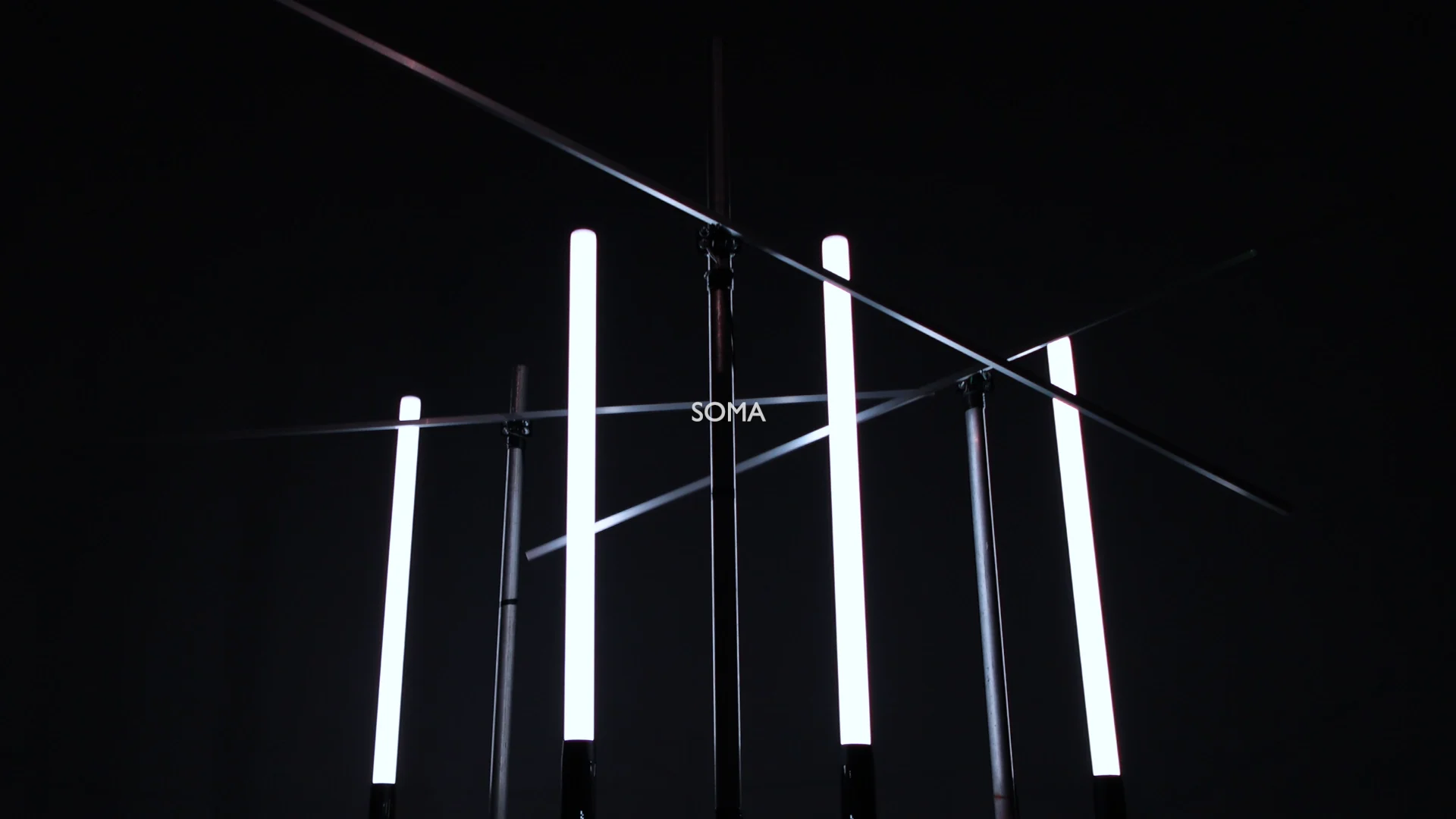
After that, we've got a smart way to use multiple AI models for coding, some handy new tools, a couple of OpenAI updates, and a sculpture that reacts to how you move.
Alright, let's get right into it.
🤿 DEEP DIVE
Trump’s AI Force Is Coming
The quick take
Trump says he will create an “AI Force” and appoint an AI czar.
The White House has not yet explained the force’s structure, duties, or whether it will have a military role.
Trump says AI growth should not be hindered and points to existing criminal and civil laws for dealing with harmful uses.
Calls for stronger safeguards and slower development are growing, with Obama arguing that government needs to regulate AI.
AI regulation and safety are also moving into upcoming diplomatic discussions, including Trump’s meeting with Xi Jinping.
The name is clear. Pretty much everything else isn’t.
Pres. Donald Trump wants to give AI the Space Force treatment.
On Saturday, the president said he’s forming an “AI Force” and plans to announce an AI “Czar” in the near future. He compared the idea directly with Space Force, which he created during his first term.
There’s just one fairly large missing piece.
CNN says the White House hasn’t explained what the AI Force would actually be, what powers its czar would have, or even whether this is supposed to become a branch of the military like Space Force.
So for now, the structure is fuzzy. But the thinking behind it is much clearer.
Keep AI moving
Trump’s announcement landed in the middle of a growing argument over whether AI development needs to slow down.
His position is basically the opposite.
Trump said his administration would not “hinder or stifle” the industry’s growth, argued that the US is leading China, and again dismissed fears around AI as a hoax. At the same time, he acknowledged there could be “BAD” uses of the technology.
His answer to those appears to be enforcement rather than slowing development. Trump said the existing criminal and civil justice system could deal with them “very easily.”
And that distinction is probably the most useful part of the announcement.
The debate described by CNN isn’t simply about whether AI has risks. Trump’s own post acknowledges bad uses. It’s increasingly about what governments should do in response.
Trump is putting continued development first and pointing to existing laws as the way to handle problems.
Others are pushing for something more active.
The argument is getting bigger
Former President Barack Obama said Friday that it was good some leading companies had called for slowing AI development, while adding that companies making that decision themselves could not be the long-term answer.
“Government has to be regulating this,” he said.
That gives you a pretty clean picture of the split taking shape.
Trump is talking about protecting AI growth while policing harmful behavior. Obama is talking about slowing development and government regulation.
And this isn’t staying inside Washington.
AI safety is expected to come up when Trump meets Chinese leader Xi Jinping, according to a White House official. The administration is also holding a high-level AI event alongside the UN General Assembly, while executives including Sam Altman, Jensen Huang and Sundar Pichai are due at a White House state dinner during Xi’s visit.
So the AI Force may still be mostly a name right now.
The argument around it definitely isn’t.

🤝 FROM OUR FRIENDS
A quick share we thought you might find useful
For product teams moving at AI speed.

AI makes it easier to ship anything, even bad ideas. The hard part is knowing which ideas are worth building.
Jira Product Discovery brings your ideas, customer insights, and priorities into one place, so your team can decide what to ship and move forward with confidence.
Capture ideas, prioritize with evidence, and build living roadmaps your team can rally around—all while staying connected to delivery in Jira, so everyone can see what’s being built and why.
Better product decisions in the AI era.
🔥 WHAT’S THE BUZZ
What people are building, sharing, and talking about
There’s something interesting about not having to choose one AI coding setup and stick with it. You could use one model to plan, another to do the actual coding, another to review it, and keep the rest of your setup basically the same.
⚒ TOOL SNAPSHOTS
Futuristic tools within AI, no-code, and productivity
⚙️ Mycel
Run client work without giving every job the keys.
Why it’s useful: Service businesses can run client work in isolated sandboxes, then decide what actually gets sent out.
.🧠 Harbor
Keep the messy stuff you save actually findable later.
Why it’s useful: Useful if your second brain includes more than typed note. Scans, handwriting, PDFs and recordings all become searchable, with a full export if you ever want out.
🎙️ VoiceCap
Keep meeting notes useful, even when English isn’t the default.
Why it’s useful: The interesting bit is that transcription, summaries and follow-ups stay in the meeting’s language, which makes this a pretty practical option for multilingual teams.
⚡ QUICK HITS
The latest in AI, tech, and productivity worth knowing
ChatGPT is getting a better look at what you’re doing. OpenAI has rolled out Appshots for ChatGPT on Windows, which passes the interface and content of active apps directly into the conversation as context. The feature is aimed at things like debugging, recreating interface designs, and pulling data from other apps, cutting out some of the copy-pasting and explaining.
OpenAI is building a version of Astra specifically for lawyers. Astra for Law combines GPT-6 Astra with a legal search index and instructions geared toward legal research, analysis, and writing. OpenAI says it scored 54% on Vals AI’s legal research evaluation, compared with 38.7% for GPT-6 Astra using web search alone, and selected law firms will get initial access through its Trusted Access program.
🎁REFERRAL REWARDS
If TIW has been useful, invite one friend or coworker who’d actually use AI/automation at work.
1 referral → get the TIW No-Code Workflows PDF (25 plug-and-play workflows)
10 referrals → get a full course free (your choice)
Your referral link: {{rp_refer_url}}
Tip: send it to a friend who’s AI-curious, a coworker who wants to move faster, or anyone trying to automate repetitive tasks.
🤖 AI MADE THIS
ℹ️ ABOUT US
The Intelligent Worker helps you to be more productive at work with AI, automation, no-code, and other technologies.
We like real, practical, and tangible use-cases and hate hand-wavy, theoretical, and abstract concepts that don’t drive real-world outcomes.
Our mission is to empower individuals, boost their productivity, and future-proof their careers.
We read all your comments - please provide your feedback!
Did you like today's email?
What more do you want to see in this newsletter?

